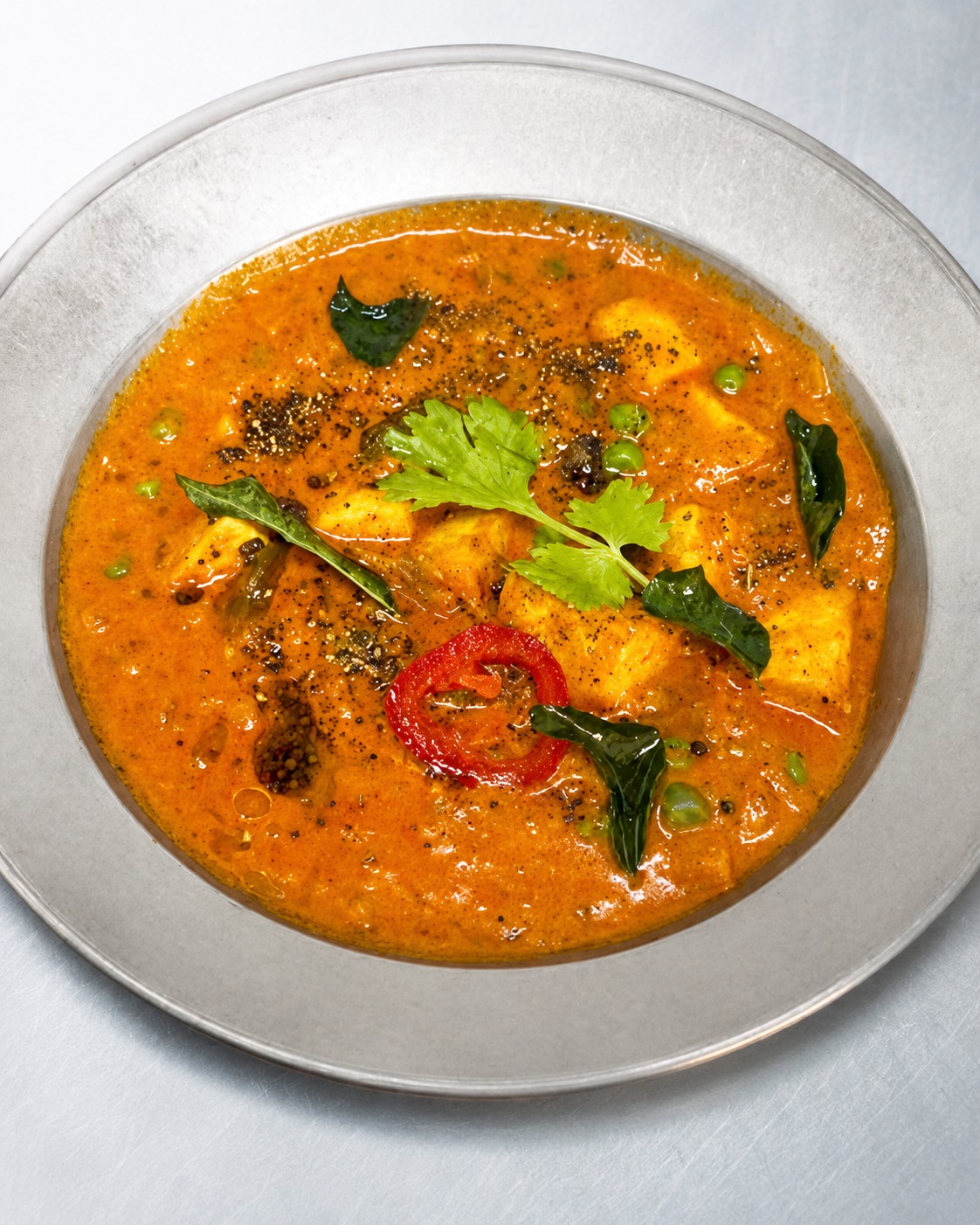
Coconut. Curry leaves. Black pepper. Tamarind. Fermentation. Seafood. Rice. Food designed for sharing.
Many of the ideas exciting diners in modern Indian restaurants today have existed in Kerala’s kitchens for generations.
Kerala sits on India’s tropical south-western Malabar Coast, a region shaped by the Arabian Sea, the Western Ghats, spice cultivation, international trade and an extraordinary mixture of communities.
The result is one of India’s most distinctive regional food cultures.
Today, as modern Indian restaurants move beyond the familiar curry-house formula, Kerala cuisine offers chefs something particularly valuable:
Tradition that already feels contemporary.
At Kerala Canteen in Leeds, that is exactly what inspires us.
Rather than changing Kerala food until it becomes unrecognisable, we take the recipes, ingredients and eating culture of Kerala and ask how they can be expressed in a contemporary British restaurant.
Here’s why Kerala’s food culture matters to the continuing evolution of modern Indian cooking.
First: What Is Kerala Cuisine?
Kerala cuisine is the regional food culture of Kerala in South India.
But describing it as one cuisine is an oversimplification.
Travel from Thiruvananthapuram in southern Kerala to the Malabar region in the north and you’ll discover changing dishes, ingredients and traditions.
Kerala’s Hindu, Muslim and Christian communities have all contributed to its culinary identity, while centuries of maritime connections brought additional influences.
What connects much of the state’s food is its landscape.
The Arabian Sea provides seafood.
The tropical climate provides coconut.
Rice is fundamental.
The Western Ghats are associated with spices.
Ingredients such as black pepper, cardamom, curry leaves, ginger, turmeric, chilli and tamarind help create Kerala’s unmistakable flavour vocabulary.
Kerala Was International Long Before “Modern Indian” Existed
One of the most interesting things about Kerala food is that being internationally connected isn’t new.
The Malabar Coast played an important role in historic maritime trade, particularly in spices.
Merchants travelled across the Arabian Sea and beyond in search of valuable commodities, including Kerala’s famous black pepper.
Trade didn’t move only ingredients.
It moved people.
And people bring cooking techniques, religions, customs and ideas.
Kerala therefore developed a food culture that was deeply regional while simultaneously connected to a much wider world.
That makes Kerala particularly relevant to modern Indian chefs today.
You can look internationally without abandoning your roots.
Kerala has been doing that for centuries.
Regional Indian Food Is Replacing the Idea of One “Indian Cuisine”
For generations of British diners, the phrase Indian restaurant created fairly predictable expectations.
- Curry.
- Rice.
- Naan.
Perhaps a tikka masala, korma, vindaloo or madras.
Those dishes have their own important history in British Indian dining.
But they don’t represent the full diversity of India.
Modern diners increasingly want to know:
Which region is this dish from?
What’s the story behind it?
What do people actually eat there?
That’s a major shift.
And Kerala is perfectly positioned within it.
Its cuisine has a clear identity.
- Coconut.
- Curry leaves.
- Seafood.
- Pepper.
- Rice.
- Dosa.
- Idli.
- Porotta.
- Sambar.
Regional meat dishes.
Vegetable cooking.
Fermentation.
Suddenly the word Kerala becomes more important than the generic word Indian.
Coconut Has Become a Modern Ingredient — But Kerala Has Always Understood It
Coconut appears everywhere in contemporary food culture.
- Coconut milk.
- Coconut water.
- Coconut oil.
- Fresh coconut.
But none of this is new to Kerala.
Generations of Kerala cooks have understood that coconut isn’t one flavour.
Fresh grated coconut behaves differently from coconut milk.
Roasted coconut tastes completely different again.
Coconut oil brings its own aroma.
Tender coconut water provides refreshment.
The technique determines the result.
This gives modern Indian chefs an enormous vocabulary to work with without needing to invent something artificial.
At Kerala Canteen, even our drinks take inspiration from that tradition.
Our Tender Coconut & Ginger Mojito takes the familiar mojito and introduces ingredients that connect it back to Kerala.
Tradition doesn’t have to stay frozen in the past.
Curry Leaves Have Moved from Supporting Ingredient to Centre Stage
For generations, curry leaves have been fundamental to South Indian kitchens.
Yet many British diners historically knew “curry” without necessarily knowing what a fresh curry leaf looked or smelled like.
That’s changing.
Modern regional Indian restaurants can put individual ingredients at the centre of the story.
At Kerala Canteen, our Crispy Curry Leaf Calamari does exactly that.
Calamari is immediately understandable.
Curry leaf gives it another identity.
It’s a useful example of how Kerala can influence contemporary Indian restaurant cooking:
Start with an authentic flavour. Present it through a format the guest immediately understands.
You don’t have to remove the regional identity to make the dish accessible.
Kerala Reminds Modern Indian Cooking That Spice Isn’t Just Chilli
For too long, Indian restaurant food in Britain has sometimes been discussed using a simple scale:
Mild → Medium → Hot.
But Indian spice is much more sophisticated than that.
Kerala’s historic relationship with spices demonstrates why.
Black pepper provides warmth and aroma.
Cardamom provides fragrance.
Turmeric contributes earthiness.
Ginger brings another kind of heat.
Tamarind provides sourness.
Curry leaves bring aroma.
Mustard seeds change completely when tempered in hot oil.
The modern Indian kitchen can therefore move the conversation away from:
“How hot is it?”
towards:
“What does the spice actually contribute?”
Our Green Pepper Lamb Chop is built around exactly that thinking.
Pepper isn’t simply there to increase heat.
It’s part of the identity of the dish and a reference to Kerala’s Spice Coast heritage.
Kerala’s Seafood Culture Feels Naturally Contemporary
Modern restaurant diners increasingly enjoy lighter dishes, seafood and smaller plates.
Kerala doesn’t need to invent a seafood tradition to respond to that demand.
It already has one.
With the Arabian Sea running along its western edge, Kerala has long-standing traditions around fish and seafood.
Pair seafood with coconut.
- Curry leaves.
- Ginger.
- Tamarind.
- Chilli.
- Pepper.
Suddenly you have dishes that feel completely at home in a contemporary restaurant while remaining connected to regional cooking.
At Kerala Canteen, that story appears through dishes such as:
- Crispy Curry Leaf Calamari
- Sea Bass Pollichathu
- King Prawn & Courgette Masala
- Grilled Octopus Moilee
- Different techniques.
- Different textures.
- One coastal identity.
Fermentation Wasn’t Invented by Modern Food Culture
Fermentation has become one of the great words of contemporary food.
But South Indian cooking has used fermentation for generations.
Think of dosa and idli.
Traditional batters based around rice and lentils are fermented before cooking, creating characteristic flavour and texture.
Long before fermentation became fashionable in modern restaurants, it was part of everyday food culture.
At Kerala Canteen, our Mini Broccoli Masala Dosa and Fried Idli & Butternut Sambar allow these South Indian traditions to sit naturally within a contemporary sharing menu.
That’s an important lesson for modern Indian cooking:
Sometimes innovation isn’t about discovering a new technique.
It’s about looking again at the sophistication already present in traditional food.
Kerala’s Vegetarian Food Fits the Way People Want to Eat Today
Plant-based eating is another area where Indian food doesn’t need to start from scratch.
Kerala has deep traditions of vegetable, lentil, rice and coconut-based cooking.
Vegetables aren’t necessarily treated as substitutes for meat.
They have their own recipes.
Their own techniques.
Their own importance.
That makes Kerala cuisine extremely relevant to modern diners looking for more vegetable-led food.
At Kerala Canteen, dishes such as Chilli & Tamarind Cauliflower, Mini Broccoli Masala Dosa, Kerala Chutney Podi Potatoes and vegetable curries aren’t designed as consolation prizes for vegetarians.
They’re dishes people should want to order regardless of whether they eat meat.
That’s an important part of modern Indian dining.
Kerala’s Sharing Culture Fits Modern Restaurants Naturally
Small plates are everywhere.
Tapas-style dining has become one of the dominant ways modern restaurants encourage people to eat socially.
But sharing several dishes isn’t remotely unusual in Indian households.
- Rice.
- Curries.
- Vegetables.
- Meat.
- Fish.
- Chutneys.
- Pickles.
- Breads.
Different dishes sit together and everyone shares.
That idea became fundamental to Kerala Canteen.
We call our approach Kerala tapas.
Of course, “tapas” isn’t a traditional Kerala word.
It’s simply an easy way to explain the format to British diners.
Smaller plates. Several dishes. Put them in the middle. Share everything.
The format feels contemporary.
The behaviour behind it is deeply familiar.
Kerala Porotta Shows Why Regional Indian Breads Matter
For many British diners:
Indian bread = naan.
Modern regional Indian restaurants are helping change that.
Kerala has its own bread and staple traditions.
One of the most loved is Kerala porotta — flaky, layered and perfect for tearing apart and scooping up curry.
At Kerala Canteen, pairing Beef & Bone Marrow Curry with Kerala Porotta immediately gives diners an experience different from the standard curry-and-naan formula.
And that’s exactly what regional Indian dining can achieve.
You don’t have to reinvent Indian food.
Sometimes you simply need to show diners what was missing from the conversation.
Kerala Food Shows That Authenticity and Creativity Can Coexist
There is sometimes a false choice in restaurant cooking.
Authentic or modern.
Traditional or creative.
We don’t believe those things need to oppose each other.
A restaurant can respect the flavour memory of a traditional dish while presenting it differently.
The important question is:
Does the new dish still understand where it came from?
That’s the philosophy behind Kerala Canteen.
And sometimes it produces combinations that are unmistakably British and Kerala at the same time.
What Happens When Kerala Meets Yorkshire?
This is where our own story becomes particularly personal.
Bobby Geetha, known from MasterChef UK and BBC Great British Menu, represented Yorkshire & Humber on Great British Menu.
The philosophy behind his cooking was to combine outstanding British and Yorkshire produce with authentic Indian recipes, spices and techniques.
That same idea became part of Kerala Canteen.
Not:
How can we make Kerala food less Indian for British diners?
But:
What happens when authentic Kerala flavour meets Yorkshire produce?
That’s a very different question.
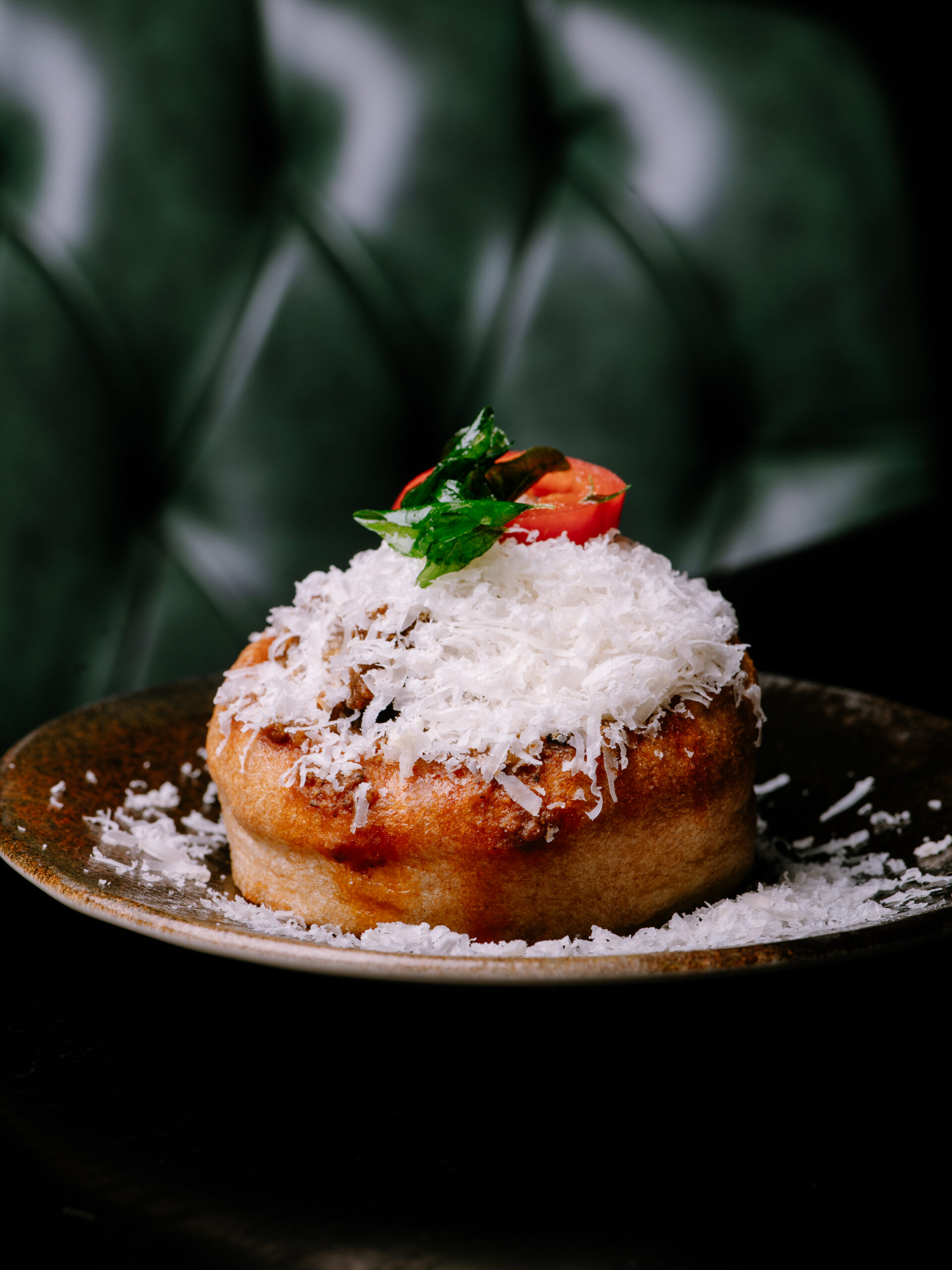
Beef Curry Pie: Tradition Can Move Forward
Our Beef Curry Pie is one example.
Beef curry has a genuine connection to sections of Kerala’s food culture.
Yorkshire pudding belongs unmistakably to Britain and Yorkshire.
Bring those ideas together and you create something new.
It doesn’t claim to be a centuries-old Kerala recipe.
It doesn’t need to.
It represents the journey of the people cooking it.
Kerala heritage meeting Yorkshire life.
Kerala’s Answer to the Sunday Roast
The same thinking inspired our Kerala interpretation of the Sunday roast.
A curried T-bone steak served with a giant Yorkshire pudding brings together two strong food cultures on one plate.
It would make little sense if the restaurant didn’t understand Kerala cooking.
And it would make little sense if Kerala Canteen weren’t proudly rooted in Yorkshire.
But together?
It tells our story.
This is what modern Indian cooking can do at its best.
Not random fusion.
Food with a reason.
The Modern Indian Cocktail Bar Can Learn from Kerala Too
Kerala’s influence doesn’t have to stop at the kitchen door.
If Kerala is historically associated with spices, tropical ingredients and coconut, why shouldn’t those ingredients enter the bar?
At Kerala Canteen, our cocktail menu follows the same philosophy as our food.
Gunpowder & Turmeric Margarita
A familiar Margarita given a Kerala-inspired identity through turmeric and gunpowder masala salt.
Tender Coconut & Ginger Mojito
The classic Mojito meets tender coconut and ginger.
Hibiscus & Jaggery Old Fashioned
A whisky classic reinterpreted using hibiscus and jaggery.
Canteen Star
A tropical cocktail influenced by ginger and jaggery.
Our mocktails receive the same attention.
Because modern Indian dining shouldn’t mean extraordinary food followed by a generic drinks list.
The story should continue into the glass.
Modern Indian Food Doesn’t Need to Be Westernised
This is perhaps the most important lesson Kerala cuisine offers.
Modernising Indian food doesn’t mean removing everything that makes it Indian.
You don’t need to reduce the spice until it’s anonymous.
You don’t need to replace regional breads with naan because naan is easier to recognise.
You don’t need to hide words such as dosa, idli, porotta or sambar.
Explain them.
Serve them confidently.
Let diners discover them.
Modern Indian restaurants can make regional cuisine accessible without making it less authentic.
That distinction sits at the centre of Kerala Canteen.
From MasterChef and Great British Menu to Kerala Canteen
Professional experience matters because it gives chefs another set of tools for presenting traditional flavour.
For Bobby Geetha, the journey from Kerala through international kitchens, MasterChef UK and Great British Menu eventually led back to a simple idea:
The flavours you grow up with can belong in a modern British restaurant without losing their identity.
Kerala Canteen takes those flavours and combines them with professional restaurant technique, quality British produce and contemporary presentation.
We describe the result as:
Affordable Premium Dining.
Serious cooking.
Strong culinary pedigree.
Authentic regional flavour.
But approachable enough to become somewhere you visit regularly rather than only on special occasions.
Why Regional Indian Cuisine Is the Future
Indian restaurants in Britain have an extraordinary history.
The next chapter doesn’t need to reject that history.
It can expand it.
Imagine British diners understanding the differences between:
- Kerala and Punjab.
- Bengal and Gujarat.
- Goa and Tamil Nadu.
- Kashmir and Rajasthan.
Imagine knowing porotta as easily as naan.
Dosa as easily as tikka masala.
Sambar as easily as korma.
That is where regional Indian restaurants have an opportunity.
India doesn’t need another invented identity.
It already has hundreds of extraordinary culinary identities waiting to be explored.
Kerala is one of them.
Kerala Food and Modern Indian Cooking: Frequently Asked Questions
What makes Kerala cuisine different from other Indian food?
Kerala cuisine is strongly shaped by its tropical south-western location and ingredients such as coconut, curry leaves, black pepper, rice, seafood, tamarind and aromatic spices. Recipes and traditions also vary considerably across Kerala’s regions and communities.
How has Kerala influenced modern Indian cooking?
Rather than a single direct influence, Kerala provides many traditions that fit naturally within contemporary Indian dining: regional spice-led cooking, seafood, fermentation, vegetable-focused dishes, coconut, sharing-style eating and distinctive breads and staples.
Why is black pepper important in Kerala cooking?
Kerala’s Malabar Coast has a historic association with the spice trade, particularly black pepper. Pepper continues to provide characteristic warmth and aroma in Kerala cooking.
Why does Kerala food use coconut?
Coconut grows abundantly in Kerala’s tropical climate and has traditionally been used in numerous forms, including fresh coconut, coconut milk, roasted coconut and coconut oil.
Is Kerala food good for vegetarians?
Yes. Kerala has extensive traditions of cooking with vegetables, lentils, rice, coconut and spices, making the cuisine particularly rich in vegetarian and plant-based dishes.
What is Kerala tapas?
Kerala tapas is Kerala Canteen’s contemporary sharing format, using smaller dishes to allow diners to experience several different Kerala flavours during one meal.
Is Kerala food always spicy?
No. Spiced and spicy aren’t the same thing. Kerala cooking can use chilli, but ingredients such as black pepper, cardamom, curry leaves, coconut, ginger and tamarind provide very different types of flavour.
Where can I try modern Kerala food in Leeds?
Kerala Canteen in Leeds specialises in contemporary Kerala dining, combining regional Kerala flavours with quality British and Yorkshire produce through sharing plates, curries, breads and spice-inspired drinks.
Tradition Doesn’t Have to Stand Still
The most exciting modern Indian cooking isn’t necessarily about making something nobody has ever seen before.
Sometimes it’s about looking backwards with enough knowledge to move forwards.
Kerala already gave us:
- Extraordinary spice traditions.
- Coconut cooking.
- Fermentation.
- Seafood.
- Vegetable-led dishes.
- Regional breads.
- Food designed for sharing.
Generations of cooks have developed these ideas long before terms such as small plates, plant-based dining and fermented food became restaurant trends.
Our responsibility isn’t to claim we invented them.
It’s to respect them.
Then decide where they can go next.
At Kerala Canteen, that journey has taken Kerala flavours thousands of miles from India’s Malabar Coast to Yorkshire.
Sometimes they arrive as Curry Leaf Calamari.
Sometimes as Beef & Bone Marrow Curry with Kerala Porotta.
Sometimes as curried T-bone steak inside a giant Yorkshire pudding.
And sometimes they arrive in a glass as a Gunpowder & Turmeric Margarita.
Different formats.
The same starting point.
Kerala.
If you’re searching for modern Indian food in Leeds, Kerala food Leeds, South Indian restaurant Leeds, Indian tapas Leeds, regional Indian cuisine or want to discover how traditional Indian food is evolving in Britain, come and experience the story around the table.
Tradition doesn’t need to be replaced to become modern.
Sometimes it simply needs to be seen differently.
Kerala Canteen, Leeds — Kerala in flavour. Yorkshire at heart.