If you’ve eaten Indian food in Britain but never tried Kerala cuisine, prepare for something quite different.
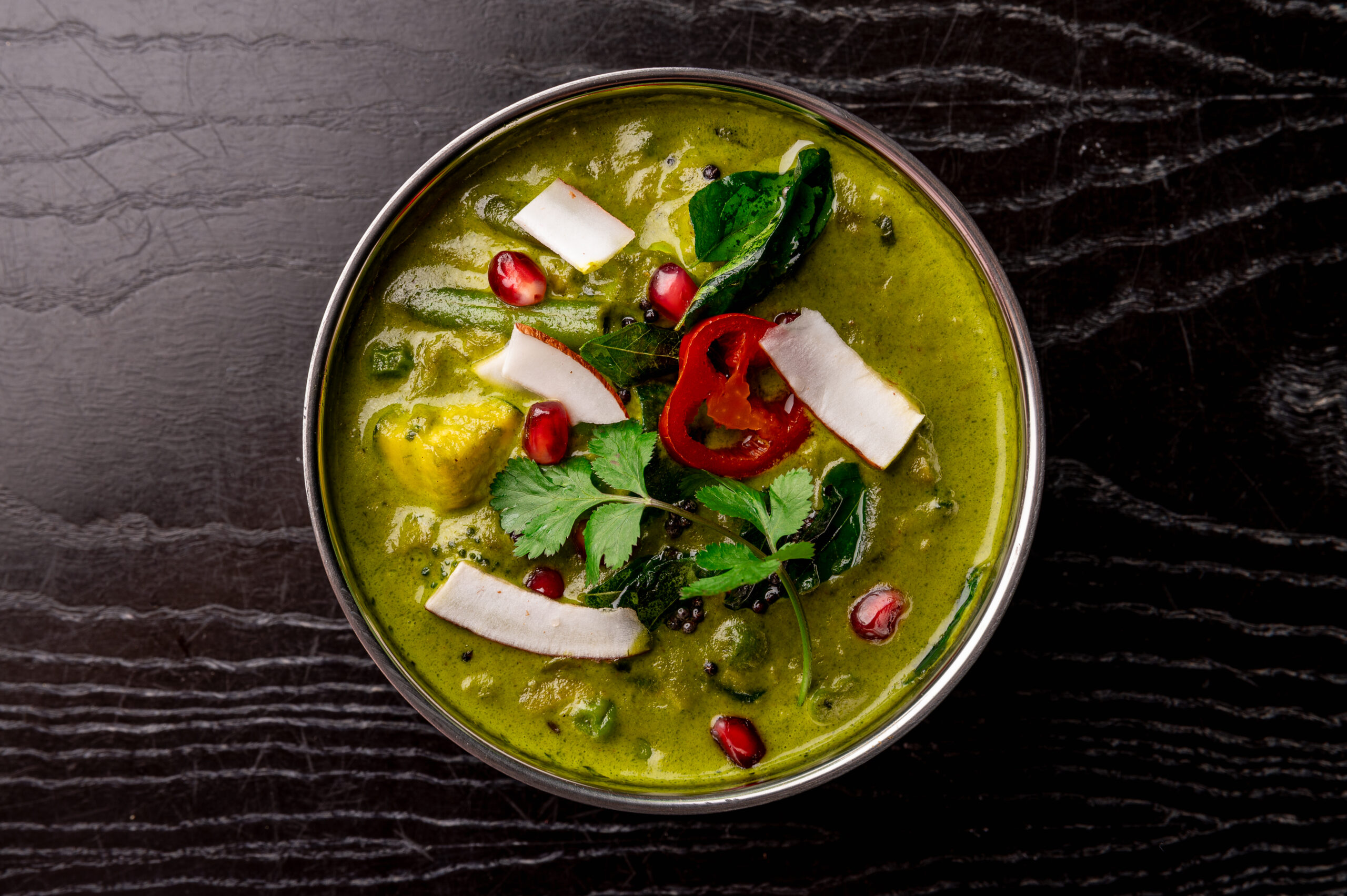
Kerala cuisine is the regional food of Kerala, a state on India’s tropical south-western Malabar Coast. It is known for coconut, curry leaves, black pepper, cardamom, ginger, tamarind, rice, seafood and deeply aromatic spices.
Rather than being defined by heavy sauces or simply by chilli heat, traditional Kerala cooking is about layers of spice, acidity, fragrance, texture and freshness.
At Kerala Canteen in Leeds, this is the food we grew up with.
Our approach is simple: preserve the character of authentic Kerala recipes while combining them, where appropriate, with outstanding produce from Yorkshire and Britain.
If you’re discovering Kerala food for the first time, here’s everything you need to know.
What Is Kerala Cuisine?
Kerala cuisine is the traditional regional cuisine of Kerala in South India.
Kerala sits between the Arabian Sea and the Western Ghats, and its geography has had an enormous influence on what people eat.
Coconut grows abundantly. The coastline provides fish and seafood. The hills produce spices. Rice is a staple, and curry leaves, black pepper, ginger, tamarind and chillies appear throughout the cuisine.
But there isn’t really one single “Kerala cuisine”.
Food changes across the state, from Thiruvananthapuram in the south to the Malabar region in the north, and Kerala’s Hindu, Muslim and Christian communities have each contributed distinctive dishes and cooking traditions.
The result is one of India’s most diverse regional cuisines.
What Does Kerala Food Taste Like?
Kerala food can be spicy, aromatic, tangy, coconut-rich, peppery, smoky or gently sweet, depending on the dish.
One of the biggest misconceptions about Indian food is that more spice automatically means more chilli.
It doesn’t.
Good Kerala cooking builds flavour using combinations of ingredients such as:
- Black pepper
- Curry leaves
- Mustard seeds
- Cardamom
- Ginger
- Turmeric
- Chilli
- Tamarind
- Coconut
- Coriander
- Cloves
- Cinnamon
These ingredients can be roasted, ground, tempered or cooked at different stages to produce completely different flavours.
That’s why two Kerala curries can use several of the same spices and still taste completely different.
Why Is Kerala Known as India’s Spice Coast?
To understand Kerala food, you need to understand its relationship with spices.
Kerala’s Malabar Coast has been connected to the international spice trade for centuries.
Its pepper, cardamom and other spices attracted traders from across the world, and those historic connections helped influence Kerala’s food culture.
Black pepper is particularly important.
Before chilli became widespread in Indian cooking, pepper provided heat, and it remains fundamental to many Kerala recipes today.
At Kerala Canteen, that heritage inspires dishes such as our Green Pepper Lamb Chop, where the flavour of pepper is allowed to become a central part of the dish rather than simply another seasoning.
What Makes Kerala Cuisine Different From Other Indian Food?
India doesn’t have one single cuisine.
Punjabi food is different from Bengali food. Gujarati food is different from Goan food. Tamil cuisine differs from Kashmiri cuisine.
And Kerala has its own unmistakable identity.
For British diners accustomed to traditional curry-house food, some of the biggest differences are immediately noticeable.
Coconut
Coconut is fundamental to Kerala cooking.
Depending on the recipe, cooks may use fresh coconut, grated coconut, roasted coconut, coconut milk or coconut oil.
It can add richness without relying on the butter and cream associated with some North Indian dishes.
Curry Leaves
Fresh curry leaves are one of the defining aromas of South Indian cooking.
They may be tempered in hot oil with mustard seeds and other spices, releasing an extraordinary fragrance.
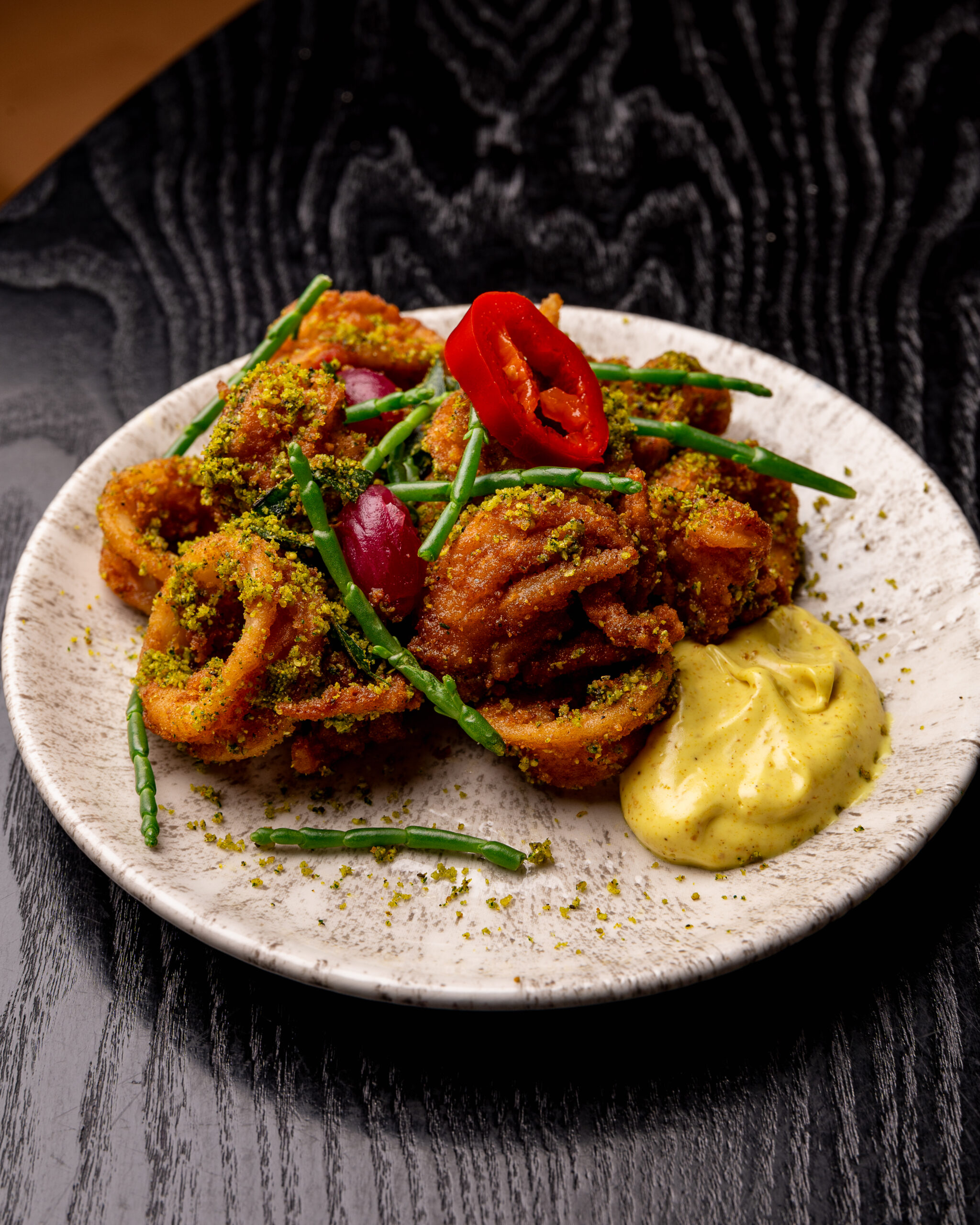
At Kerala Canteen, they’re celebrated prominently in dishes such as our Crispy Curry Leaf Calamari.
Rice
Rice is central to everyday eating in Kerala.
It appears as rice itself but also forms the foundation of dishes such as dosa, idli and other traditional preparations.
Seafood
Kerala has an extensive coastline, so fish and seafood naturally play an important role.
Prawns, fish, squid and other seafood can be paired with coconut, curry leaves, chilli, tamarind and spices.
Black Pepper
Kerala’s historic relationship with pepper gives its cuisine another distinctive dimension.
Pepper provides warmth and complexity that is very different from simply adding more chilli.
Is Kerala Food the Same as South Indian Food?
Kerala food is South Indian food, but not all South Indian food is Kerala food.
South India includes several states with their own languages, histories and culinary traditions.
Kerala cuisine therefore sits within the broader South Indian food culture while retaining its own identity.
Dosa and idli, for example, are eaten across different parts of southern India, but Kerala also has dishes, breads, curries and preparations strongly associated with its own regional traditions.
For someone beginning to explore Indian cuisine, thinking regionally is one of the best ways to understand it.
Instead of asking only:
“What Indian food do I like?”
start asking:
“Which region of Indian food do I like?”
That’s when Indian cuisine becomes really exciting.
What Is a Kerala Porotta?
One of the first things British diners notice at Kerala Canteen is that Kerala food isn’t centred around naan.
One of Kerala’s much-loved breads is porotta.
Kerala porotta is a flaky, layered flatbread that can be torn apart and used to scoop up curries.
The combination of porotta and curry is comfort food for many Malayalis.
If you’re trying Kerala cuisine for the first time, we’d strongly recommend ordering one alongside your curry.
What Is a Kerala Dosa?
A dosa is a thin, savoury preparation traditionally made using a fermented rice-and-lentil batter.
It can be served crisp and filled or accompanied by dishes such as sambar and chutneys.
At Kerala Canteen, dishes such as our Mini Broccoli Masala Dosa allow guests to discover this style of South Indian food within our sharing-menu format.
What Are Idli and Sambar?
Idli are soft, steamed savoury cakes traditionally made from a fermented rice-and-lentil batter.
Sambar is a lentil-based preparation typically flavoured with vegetables, tamarind and spices.
They’re classics of South Indian food.
Our Fried Idli & Butternut Sambar takes that familiar combination and presents it through the contemporary Kerala Canteen style.
Does Kerala Cuisine Include Beef?
Yes.
This sometimes surprises British diners who assume beef isn’t eaten in India.
India’s food culture varies enormously by region and community, and beef has a longstanding place within sections of Kerala’s food culture.
Kerala-style beef preparations are particularly well known.
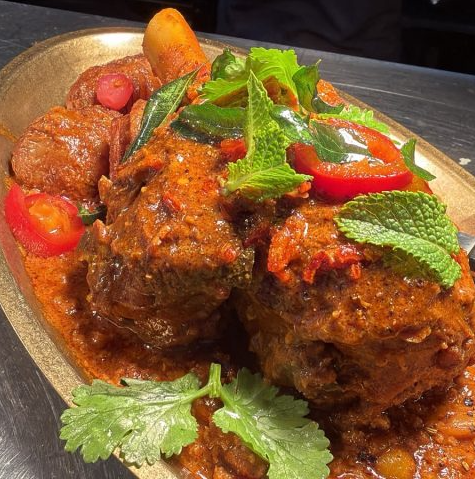
At Kerala Canteen, beef has become an important part of our menu, including our Beef & Bone Marrow Curry and other Kerala-meets-Yorkshire creations.
Pair the Beef & Bone Marrow Curry with flaky Kerala porotta and you’ll experience one of the combinations that best explains our restaurant.
Is Kerala Cuisine Good for Vegetarians and Vegans?
Absolutely.
Kerala has an extraordinary tradition of vegetable-based cooking.
Coconut, lentils, rice, vegetables, spices and pulses create dishes with enormous flavour without requiring meat.
Vegetarian and plant-based diners can discover dishes such as vegetable curries, dosa, idli, sambar and vegetable preparations using coconut, tamarind and spices.
Kerala cuisine is a particularly interesting choice for diners who want vegetarian Indian food that goes beyond the familiar paneer-based dishes found on many restaurant menus.
Is All Kerala Food Very Spicy?
No.
Spiced and spicy are not the same thing.
Some Kerala dishes can certainly carry significant chilli heat, but others are mild, coconut-rich, tangy, peppery or aromatic.
The purpose of spice should be flavour.
Cardamom provides fragrance. Black pepper provides warmth. Tamarind brings acidity. Curry leaves contribute aroma. Coconut can soften and round a dish.
Understanding this balance is one of the keys to appreciating Kerala cooking.
What Should I Order If I’ve Never Tried Kerala Food Before?
This is one of the questions we hear most often at Kerala Canteen.
Our advice is simple:
Don’t order just one dish.
Kerala food is best understood through contrast.
Try something crispy, something from the sea, something peppery, a curry and a bread.
For a first visit to Kerala Canteen, we’d consider dishes such as:
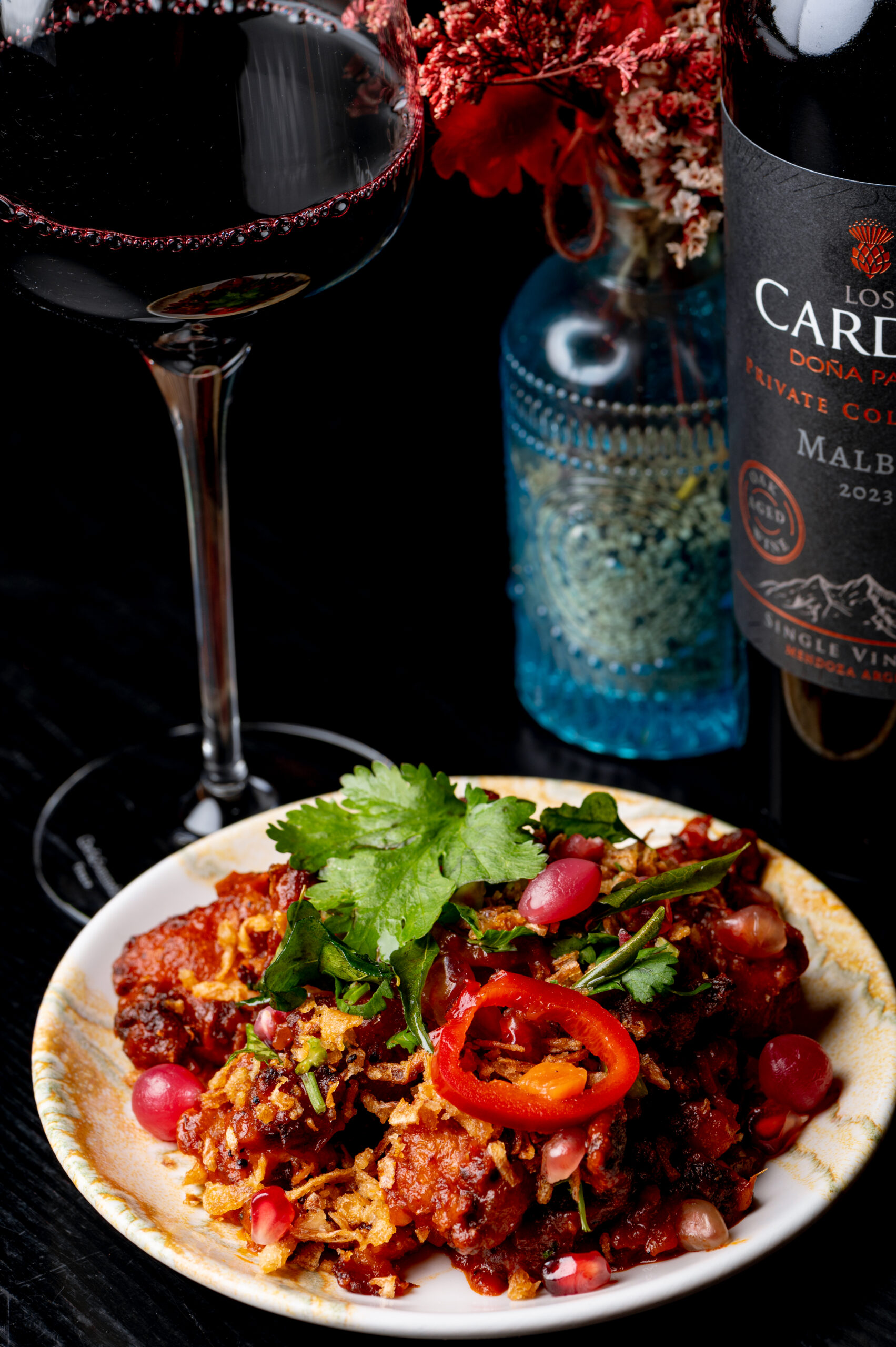
Trivandrum Fried Chicken
A great introduction to Kerala spice and one of our signature small plates.
The name is particularly personal because Thiruvananthapuram, also known as Trivandrum, is Bobby Geetha’s hometown.
Crispy Curry Leaf Calamari
A simple introduction to two important parts of Kerala food culture: seafood and curry leaves.
Green Pepper Lamb Chop
A dish that puts Kerala’s historic relationship with pepper front and centre.
Chilli & Tamarind Cauliflower
A vegetarian dish demonstrating the balance between heat, sweetness and acidity.
Mini Broccoli Masala Dosa
An accessible introduction to the dosa tradition of southern India.
Beef & Bone Marrow Curry
Deep, comforting Kerala-inspired flavours combined with the richness of bone marrow.
Kerala Porotta
Don’t skip it.
Tear it, share it and use it to scoop up your curry.
What Is Kerala Tapas?
Kerala Canteen isn’t intended to recreate a conventional Indian curry house.
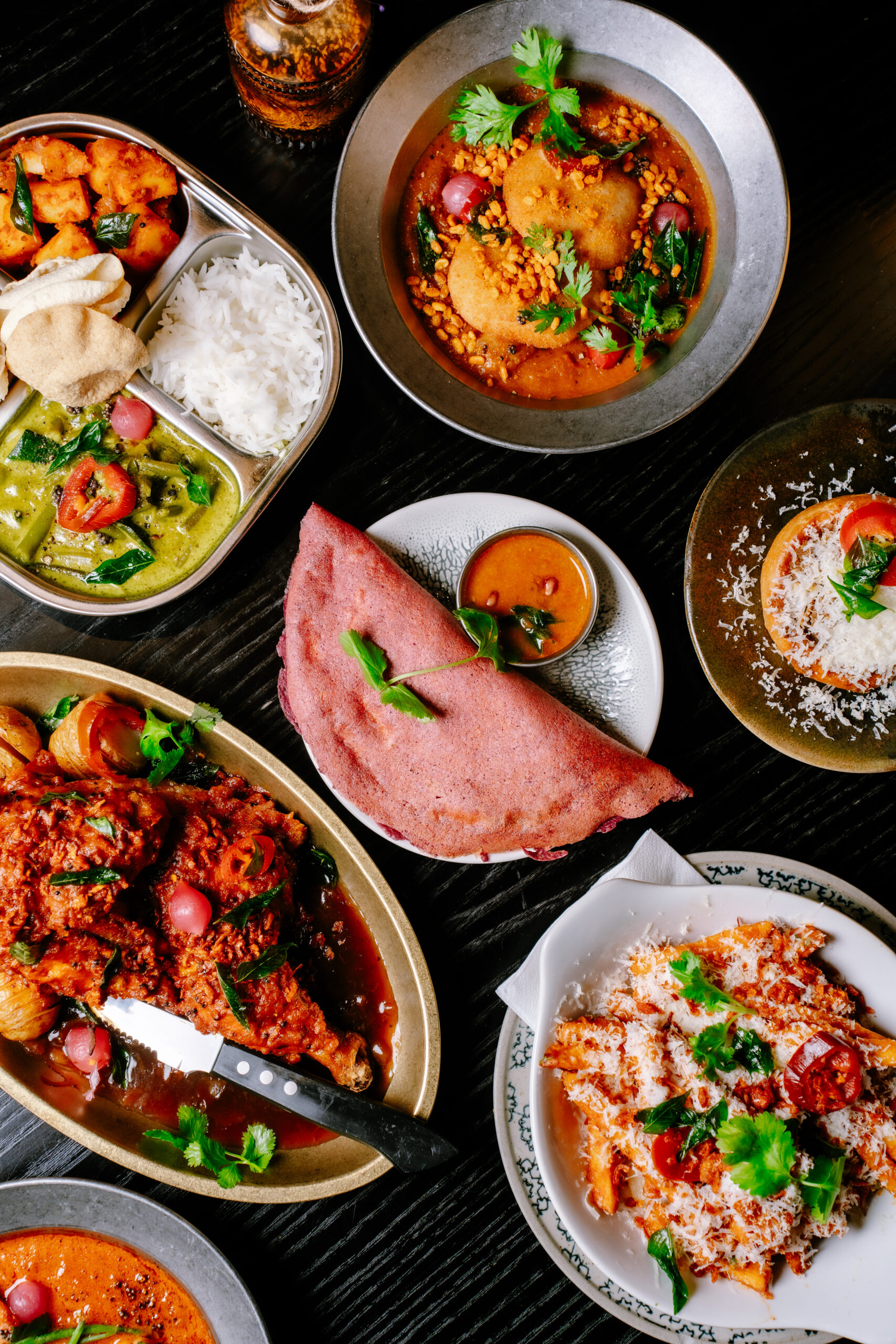
Our menu is built around Kerala tapas: smaller dishes designed to be explored and shared.
“Tapas” isn’t a traditional Kerala word, of course.
It’s our way of helping British diners immediately understand how we want them to experience the menu.
Instead of everyone ordering one starter and one main course, put several dishes in the middle of the table.
Share them.
Talk about them.
Order another if you discover something you love.
This style also reflects something very familiar to Indian families: a table containing multiple dishes that everyone eats together.
Kerala Food Meets Yorkshire Produce
Kerala Canteen’s story also belongs to Yorkshire.
Consultant Chef Bobby Geetha, known from MasterChef UK and BBC Great British Menu, represented Yorkshire & Humber on Great British Menu.
The cooking philosophy behind that experience continues at Kerala Canteen:
Take authentic Indian recipes, spices and techniques and combine them with outstanding British and Yorkshire produce.
We’re not interested in removing the character of Kerala food to make it more familiar.
We would rather preserve its identity while allowing Kerala and Yorkshire to meet naturally on the plate.
That thinking has inspired dishes such as our Beef Curry Pie and our distinctive Kerala Sunday Roast with curried T-bone steak served in a giant Yorkshire pudding.
It isn’t Kerala pretending to be Yorkshire.
And it isn’t Yorkshire pretending to be Kerala.
It’s the conversation between the two that makes it interesting.
Kerala’s Spices Don’t Stop at the Kitchen
If you’re visiting Kerala Canteen, don’t explore the food without looking at the drinks.
Our signature cocktails take familiar classics and introduce ingredients inspired by Kerala’s spice culture.
The Gunpowder & Turmeric Margarita brings turmeric and gunpowder masala salt into the Margarita.
Our Tender Coconut & Ginger Mojito takes inspiration from Kerala’s abundance of coconut.
The Hibiscus & Jaggery Old Fashioned introduces floral hibiscus and jaggery to the whisky classic.
And the Canteen Star combines tropical flavours with our ginger-and-jaggery influence.
Our mocktails follow the same philosophy, because choosing an alcohol-free drink shouldn’t mean choosing something less interesting.
Why Is Kerala Cuisine Becoming More Popular in the UK?
British diners increasingly understand that “Indian food” represents an enormous collection of regional cuisines rather than one menu.
That’s good news for Kerala food.
People are becoming more adventurous about regional Indian cooking, fermented foods, seafood, plant-based dishes, sharing plates and authentic spice.
Kerala naturally brings all of these together.
And once you’ve experienced the combination of curry leaves, coconut, black pepper, tamarind, seafood, rice and flaky porotta, it’s difficult to confuse Kerala cuisine with anything else.
Where Can I Try Kerala Food in Leeds?
If you’re searching for Kerala food in Leeds, South Indian food in Leeds or simply want to experience a different kind of Indian restaurant, Kerala Canteen was created specifically to tell that story.
Kerala Canteen has been recognised among the Top 100 Indian Restaurants in the UK, but our purpose remains straightforward:
To introduce more people to the food of Kerala.
Not by hiding its flavours.
By celebrating them.
Whether you’re a lifelong Malayali missing the food you grew up with or someone who has never heard of Kerala until today, you should be able to sit at the same table and find something exciting.
Kerala Cuisine FAQ
What is Kerala cuisine known for?
Kerala cuisine is particularly known for coconut, curry leaves, black pepper, rice, seafood, tamarind and aromatic spices, although ingredients and cooking styles vary considerably across the state.
Where is Kerala?
Kerala is a state on the south-western coast of India, bordered by the Arabian Sea and the Western Ghats.
Is Kerala food North Indian or South Indian?
Kerala cuisine is South Indian, but it has its own distinctive regional identity.
Is Kerala food very hot?
Some dishes are hot, but Kerala food isn’t defined solely by chilli. Many recipes focus instead on aromatic spice, black pepper, coconut, sourness and balance.
Is Kerala food vegetarian?
Kerala cuisine includes a huge variety of vegetarian dishes as well as seafood, meat and poultry. Its vegetable, lentil and coconut-based cooking makes it particularly interesting for vegetarian and vegan diners.
Does Kerala food contain coconut?
Coconut is extremely important in Kerala cuisine and can appear as coconut milk, grated coconut, roasted coconut or coconut oil. However, not every Kerala dish contains coconut.
What bread is eaten in Kerala?
Kerala has several traditional breads and starches. Kerala porotta is particularly popular and is a flaky, layered flatbread commonly eaten with curries.
Is dosa from Kerala?
Dosa is part of the wider culinary traditions of South India and is widely eaten in Kerala, although it isn’t exclusive to Kerala.
What should a beginner order at a Kerala restaurant?
Start with several dishes rather than only one curry. At Kerala Canteen, a combination such as Trivandrum Fried Chicken, Curry Leaf Calamari, Green Pepper Lamb Chop, Beef & Bone Marrow Curry and Kerala Porotta provides a broad introduction to different flavours and textures.
Where can I eat authentic Kerala food in Leeds?
Kerala Canteen in Leeds specialises in Kerala-inspired regional Indian cooking, Kerala tapas and spice-led drinks, combining authentic culinary influences from Kerala with quality British and Yorkshire produce.
Discover Kerala Cuisine in Leeds
So, what is Kerala cuisine?
- It’s the food of a tropical South Indian state shaped by the Arabian Sea, coconut palms, rice, generations of family cooking and one of the world’s most historically important spice-growing regions.
- It’s curry leaves crackling in hot oil.
- It’s the warmth of black pepper.
- It’s coconut, tamarind and ginger.
- It’s seafood from the coast.
- It’s curry scooped up with flaky porotta.
- It’s food designed to bring people around a table.
- And at Kerala Canteen, it’s also a little bit of Yorkshire.
If you’ve spent years thinking you know Indian food but have never explored Kerala cuisine, there is still an entire part of India waiting for you.
Come hungry. Order several plates. Share everything.
Discover Kerala, one dish at a time.
Kerala Canteen, Leeds — Kerala in flavour. Yorkshire at heart.