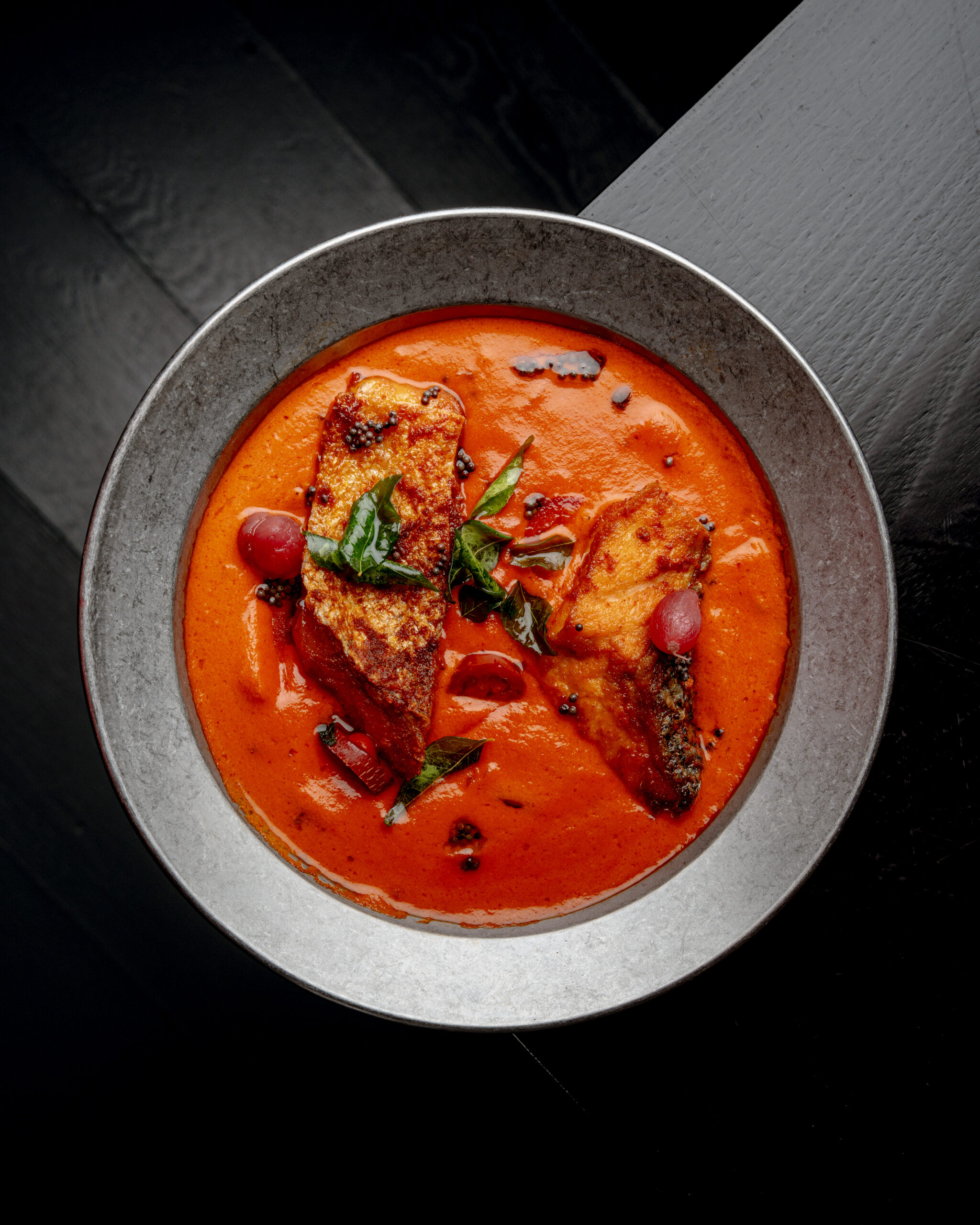
If there is one ingredient that immediately connects you with the food of Kerala, it is coconut.
Fresh coconut. Grated coconut. Coconut milk. Roasted coconut. Coconut oil. Tender coconut water.
In Kerala, coconut isn’t simply an ingredient added to make a curry creamy. It has traditionally been part of everyday cooking, drinks, snacks, desserts and life itself.
That’s why anyone trying to understand authentic Kerala cuisine should start by understanding the coconut.
At Kerala Canteen in Leeds, coconut appears throughout our food and drinks in different forms, reflecting the flavours Bobby Geetha grew up with in Kerala while showing British diners that South Indian food can be very different from the Indian cuisine they may already know.
So why is coconut so important in Kerala cooking?
Here’s the story.
Why Is Coconut Used So Much in Kerala Food?
Kerala is a tropical state running along India’s south-western Malabar Coast.
Its warm, humid climate and long coastline provide excellent conditions for coconut palms, and coconut has consequently become deeply connected with Kerala’s agriculture, food and culture.
For generations, cooks have been able to take one ingredient and use it in remarkably different ways.
The flesh can be grated.
It can be ground into pastes.
Coconut milk can enrich curries.
Coconut can be roasted with spices.
The oil can be used for cooking and tempering.
Tender coconuts provide refreshing water.
Even within a single Kerala meal, coconut can appear several times without every dish tasting of coconut.
That’s what makes it so interesting.
Is Kerala Named After the Coconut Tree?
There is a famous connection between Kerala’s name and the coconut palm.
In Malayalam, “kera” is associated with the coconut palm, while “alam” is commonly interpreted as land.
This has contributed to Kerala often being described as the “land of coconuts.”
Whether you’re travelling through Kerala or simply looking at photographs of the state, coconut palms are difficult to miss.
They are part of the landscape.
And naturally, they became part of the kitchen.
How Is Coconut Used in Kerala Cooking?
One of the most important things for beginners to understand is that there isn’t one single way of using coconut.
Changing its form and cooking technique can completely change what it contributes to a dish.
Fresh Grated Coconut
Fresh coconut can be grated and incorporated into vegetable dishes, chutneys and accompaniments.
It adds texture, freshness and a gentle natural sweetness.
In some preparations, grated coconut is almost a seasoning in its own right.
Coconut Milk
Coconut milk is probably the form most familiar to British diners.
It can provide body and richness to curries while balancing chilli, acidity and aromatic spices.
But a properly balanced coconut-based curry shouldn’t simply taste sweet or creamy.
The coconut should work alongside ingredients such as ginger, curry leaves, chilli, turmeric, pepper and other spices.
Roasted Coconut
This is where coconut can become something completely different.
Roasting coconut changes its character.
The flavour becomes deeper, nuttier and more intense.
In traditional Kerala cooking, roasted coconut can be ground with spices to create rich curry bases with considerable depth.
So two curries may both contain coconut while tasting completely different because of the way that coconut has been prepared.
Coconut Oil
Coconut oil can give Kerala food a particularly recognisable aroma.
It may be used for cooking or for tempering ingredients such as curry leaves, mustard seeds and chillies.
That moment when curry leaves hit hot oil and release their fragrance is one of the great smells of a South Indian kitchen.
For someone who grew up around Kerala cooking, that aroma can immediately feel like home.
Tender Coconut Water
Coconut doesn’t stop at the kitchen.
Tender coconut water is consumed throughout tropical India as a naturally refreshing drink.
At Kerala Canteen, we’ve taken that familiar Kerala ingredient into our bar.
Our Tender Coconut & Ginger Mojito reimagines the classic mojito with tender coconut water, ginger and mint.
Our alcohol-free Tender Coconut Cooler follows the same idea.
It’s a perfect example of Kerala Canteen’s philosophy:
Take something authentically connected to Kerala and present it in a contemporary way.
Does Every Kerala Curry Contain Coconut?
No.
This is one of the misconceptions about Kerala cuisine.
Coconut is extremely important, but not every Kerala dish or curry needs coconut.
Kerala cooking is enormously diverse.
Black pepper, tamarind, curry leaves, ginger, chilli, mustard seeds and many other ingredients can be equally important depending on the recipe.
There are rich coconut-based curries, but there are also fiery preparations, pepper-led dishes, fried foods, roasted dishes and deeply spiced meat curries.
Understanding Kerala food means looking beyond any single ingredient.
Does Coconut Make Kerala Curry Sweet?
Not necessarily.
Coconut has a subtle natural sweetness, but Kerala cooking frequently balances that richness against other flavours.
Imagine coconut alongside:
- Chilli for heat.
- Tamarind for sourness.
- Black pepper for warmth.
- Ginger for freshness and heat.
- Curry leaves for fragrance.
- Mustard seeds for pungency.
Suddenly coconut isn’t making the dish “sweet.”
It’s providing balance.
That’s one of the reasons Kerala cooking can deliver such complex flavours from relatively simple combinations of ingredients.
What Is a Kerala Moilee?
One style of Kerala cooking that demonstrates coconut beautifully is moilee, sometimes written as molee.
It is associated with a gentler style of coconut-based curry, often paired with fish or seafood.
At Kerala Canteen, our Grilled Octopus Moilee brings this Kerala flavour profile into our tapas-style menu.
The octopus provides texture and savoury depth while the moilee brings the softer, aromatic character of coconut-led Kerala cooking.
For someone who thinks all Indian curry needs to be heavy or extremely hot, dishes in this family can be a revelation.
Why Do Coconut and Seafood Work So Well Together?
Look at Kerala’s geography and the answer becomes obvious.
Kerala has both an abundance of coconut palms and a long coastline.
Fish and seafood naturally became fundamental ingredients in many coastal communities.
Coconut can provide richness without overwhelming delicate seafood, while ingredients such as curry leaves, ginger, chilli and tamarind introduce fragrance, heat and acidity.
That’s why seafood and coconut appear together so naturally in Kerala cuisine.
At Kerala Canteen, our seafood dishes help tell this coastal story through ingredients such as calamari, sea bass, king prawns and octopus.
Coconut Is Also Important in Vegetarian Kerala Cooking
You don’t need meat or seafood to understand the importance of coconut.
Kerala has a remarkable vegetarian culinary tradition.
Vegetables, lentils, rice, coconut and spices can create meals with enormous variety without relying on meat.
Fresh or ground coconut can add texture to vegetable preparations.
Coconut milk can give body to vegetable curries.
Roasted coconut can create deeper flavours.
This is one reason Kerala cuisine can be so exciting for vegetarian and vegan diners.
The vegetables aren’t simply substitutes for meat.
They belong to culinary traditions that have existed for generations.
What Is the Difference Between Coconut-Based Kerala Curry and a Creamy North Indian Curry?
This is particularly useful for British diners discovering regional Indian cuisine.
Many people associate Indian restaurant curries with cream, butter or yoghurt.
Those ingredients certainly have important places within different Indian culinary traditions.
But Kerala sits in a completely different part of India.
Coconut can perform some of the roles that dairy performs elsewhere, while creating a very different flavour.
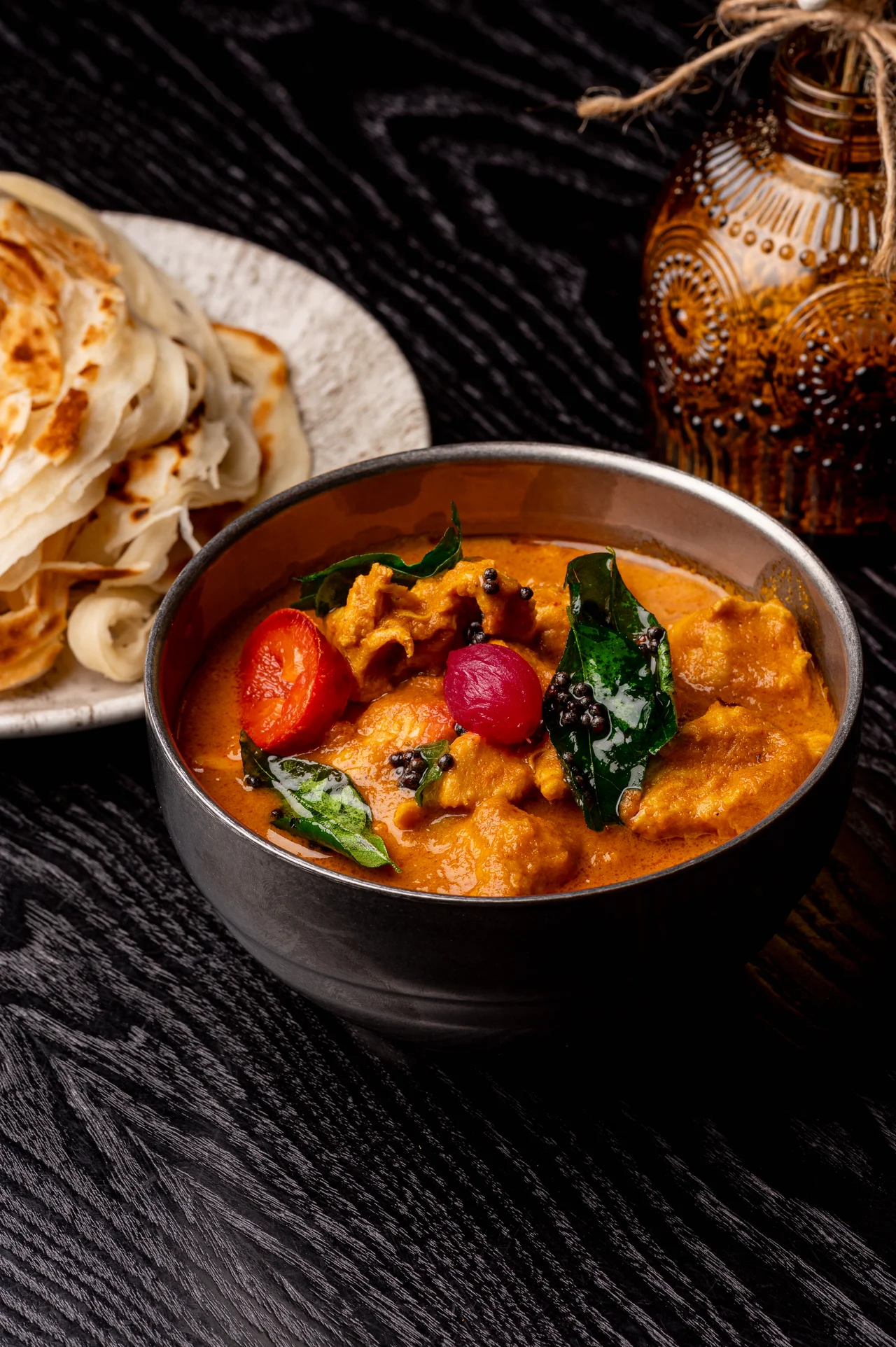
A coconut-based Kerala curry might combine coconut milk with curry leaves, ginger, turmeric and chilli.
The result can feel fragrant and tropical rather than buttery.
Neither approach is more “Indian.”
They’re simply expressions of different regional food cultures.
Coconut and Kerala’s Famous Spice Culture
Coconut becomes even more interesting when combined with Kerala’s spices.
Kerala’s Malabar Coast has been connected to the international spice trade for centuries.
Black pepper, cardamom and other valuable spices helped bring traders to this part of India from across the world.
That means Kerala cuisine developed in a landscape where both coconut and extraordinary spices were readily available.
Think about the possibilities:
- Coconut and black pepper.
- Coconut and cardamom.
- Coconut and ginger.
- Coconut and turmeric.
- Coconut and chilli.
- Coconut and curry leaves.
Each combination can move in a completely different direction.
That’s why describing Kerala cuisine simply as “coconut curry” misses most of the story.
From Kerala to Yorkshire
For Bobby Geetha, coconut is also connected to childhood and identity.
The food philosophy behind Kerala Canteen developed from the flavours Bobby Geetha grew up with in Kerala and his later career in professional kitchens.
Known from MasterChef UK and BBC Great British Menu, where he represented Yorkshire & Humber, Bobby’s approach has been to bring authentic Indian recipes, spices and techniques together with outstanding British and Yorkshire produce.
That doesn’t mean westernising Kerala food.
It means allowing two places to meet.
Kerala provides the soul and spice.
Yorkshire provides extraordinary produce.
And the restaurant provides the table where they come together.
Coconut Beyond Curry: Kerala Canteen’s Drinks
One of the most exciting things about coconut is that it doesn’t have to remain on the plate.
Our bar programme takes ingredients associated with Kerala and introduces them into familiar cocktails and mocktails.
The Tender Coconut & Ginger Mojito is a perfect example.
A mojito is instantly recognisable.
But add tender coconut water and ginger and suddenly the drink starts telling a completely different story.
Our Mango Tango mocktail combines mango, coconut and lime in a drink inspired by the flavours of lassi.
Elsewhere on the bar you’ll find Kerala ingredients and spices such as jaggery, ginger, turmeric and hibiscus used to give familiar drinks a Kerala Canteen identity.
For us, the bar should tell the same story as the kitchen.
What Should I Order to Experience Coconut at Kerala Canteen?
If you’re new to Kerala cuisine, don’t search for a single dish that contains the most coconut.
Instead, experience how Kerala ingredients change across a meal.
Try a selection of our Kerala tapas.
Explore one of our seafood dishes such as Grilled Octopus Moilee.
Add a curry and flaky Kerala Porotta.
Then order a Tender Coconut & Ginger Mojito or an alcohol-free Tender Coconut Cooler.
The purpose isn’t to make everything taste of coconut.
It’s to understand how one ingredient can play several completely different roles.
Is Coconut Healthy?
Coconut contains fats as well as fibre and micronutrients depending on the form in which it is consumed.
But rather than labelling an individual traditional ingredient simply “healthy” or “unhealthy,” it’s more useful to consider the entire dish, portion and overall diet.
Traditional Kerala cuisine uses coconut as one ingredient within a much broader food culture containing vegetables, lentils, rice, seafood, spices and other ingredients.
At Kerala Canteen, our interest is first and foremost culinary:
What does coconut contribute to the flavour, texture and identity of the dish?
Coconut in Kerala Cuisine: Frequently Asked Questions
Why does Kerala food use so much coconut?
Coconut palms thrive in Kerala’s tropical climate and coconut has historically been readily available across the region. As a result, generations of cooks have incorporated coconut flesh, milk and oil into numerous dishes.
Is coconut used in every Kerala curry?
No. Coconut is fundamental to Kerala cuisine, but many Kerala dishes don’t depend on coconut.
Is Kerala coconut curry spicy?
It can be, but not necessarily. Coconut-based curries range from gentle and aromatic to much hotter preparations depending on the recipe and spices used.
What spices go well with coconut in Kerala cooking?
Common combinations can include curry leaves, black pepper, ginger, turmeric, chilli, mustard seeds and cardamom, depending on the dish.
What is coconut milk used for in Kerala food?
Coconut milk can provide richness and body to curries and is particularly associated with a variety of vegetable, fish and seafood preparations.
Is coconut oil used in Kerala cooking?
Yes. Coconut oil has traditionally played an important role in Kerala cooking and can provide a distinctive aroma and flavour.
Is Kerala food good for vegans?
Kerala has a rich plant-based food tradition involving vegetables, lentils, rice, coconut and spices. However, individual dishes and restaurant preparations vary, so diners should always check dietary information.
Where can I try Kerala food in Leeds?
Kerala Canteen in Leeds specialises in contemporary Kerala dining, combining regional Kerala flavours and recipes with quality British and Yorkshire produce.
Why Coconut Tells the Story of Kerala
So why is coconut so important in Kerala cooking?
Because it isn’t simply an ingredient.
It represents geography.
- Climate.
- Agriculture.
- Tradition.
- Family cooking.
And generations of culinary knowledge about how one ingredient can be transformed in countless ways.
Fresh coconut can provide texture.
Coconut milk can provide richness.
Roasted coconut can provide depth.
Coconut oil can provide aroma.
Tender coconut water can provide refreshment.
And when coconut meets black pepper, curry leaves, ginger, tamarind, turmeric and chilli, you begin to understand why Kerala food tastes unlike any other regional Indian cuisine.
If you’re discovering Kerala food for the first time, don’t just look for the hottest curry.
Look for the coconut.
Follow the curry leaves.
Tear a Kerala porotta.
Try the seafood.
Taste the spices.
And you’ll start to discover the food of India’s Spice Coast.
Discover Kerala Cuisine in Leeds
Kerala Canteen celebrates the food of Kerala through Kerala tapas, curries, seafood, regional breads and spice-inspired cocktails and mocktails.
Recognised among the Top 100 Indian Restaurants in the UK, our aim is to introduce more people to the extraordinary diversity of regional Indian food.
If you’re searching for Kerala food in Leeds, South Indian food in Leeds, coconut curry in Leeds, authentic Indian restaurant Leeds or simply want to discover a different side of Indian cuisine, come and experience it for yourself.
Kerala Canteen, Leeds.
Kerala in flavour. Yorkshire at heart.