Long before Kerala became famous for its beaches, backwaters and coconut palms, people travelled enormous distances for something far smaller.
Spices.
Black pepper. Cardamom. Ginger. Turmeric. Cinnamon. Cloves.
For centuries, spices grown in and traded through Kerala helped connect India’s south-western Malabar Coast with merchants and markets far beyond India.
This extraordinary relationship with spices is why Kerala is often described as the Spice Garden of India or associated with India’s legendary Spice Coast.
But in Kerala, spices aren’t simply commodities from history.
They’re part of everyday cooking.
They’re crushed, roasted, tempered and ground. They’re added at different stages of cooking to create fragrance, warmth, acidity and complexity.
And understanding that difference is one of the best ways to understand Kerala cuisine.
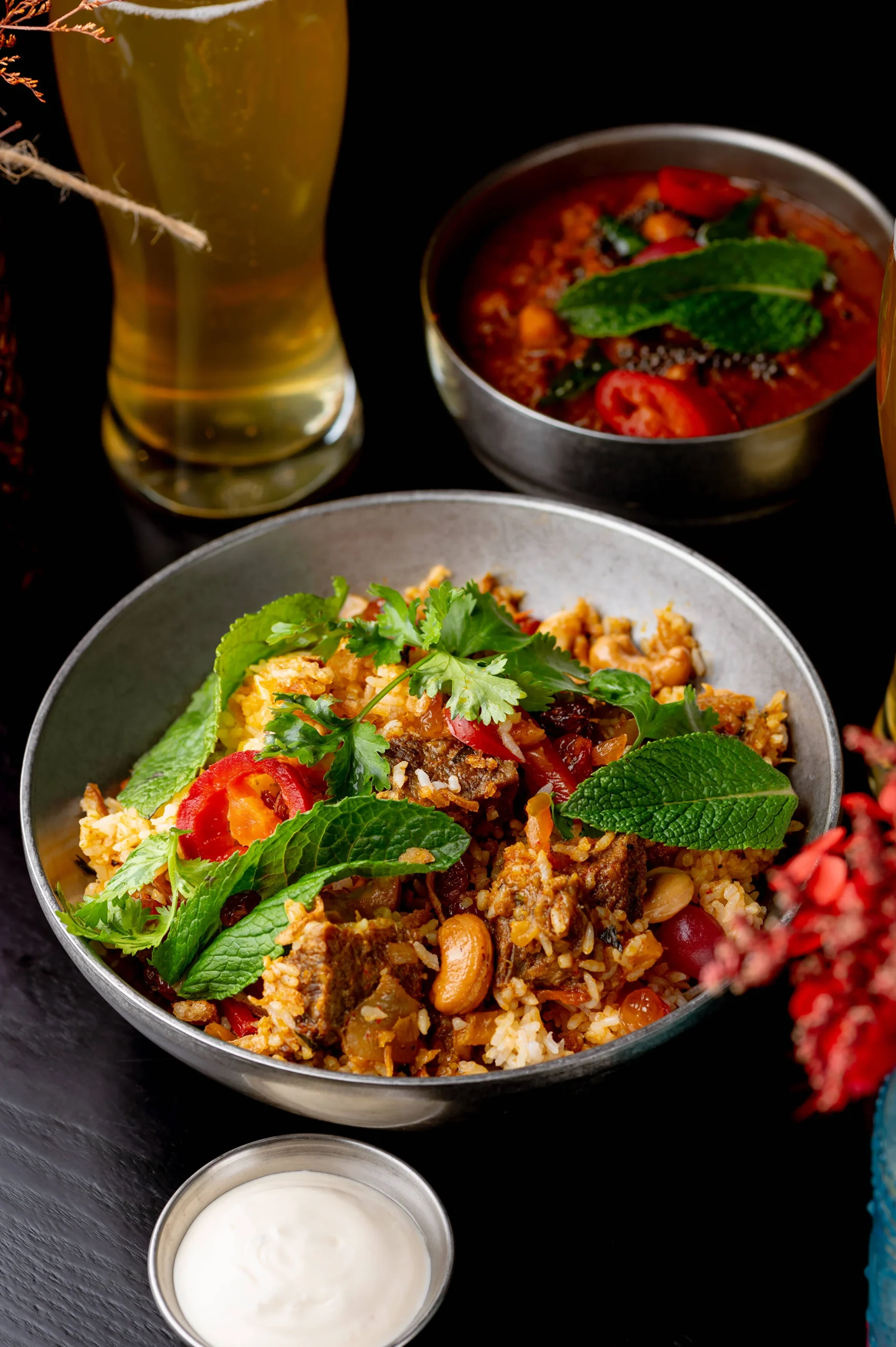
At Kerala Canteen in Leeds, Kerala’s spice heritage sits at the heart of everything from our curries and Kerala tapas to our spice-infused cocktails and mocktails.
So why did this small corner of southern India become so famous for spices?
Let’s travel back to where the story began.
Why Is Kerala Called the Spice Garden of India?
Kerala lies along the tropical south-western coast of India between the Arabian Sea and the Western Ghats.
Its geography and climate created conditions suitable for growing important spices and other tropical crops.
But geography alone doesn’t explain Kerala’s importance.
Its position on the Arabian Sea also gave the region access to historic maritime trading routes.
That combination — spices on the land and trading routes by the sea — helped make the Malabar Coast internationally significant.
For centuries, traders came searching for Kerala’s spices, with black pepper becoming particularly important.
Pepper was valuable.
It travelled.
And Kerala became connected to a much wider world.
Why Was Kerala Black Pepper So Important?
If one spice represents Kerala’s historic importance, it is black pepper.
Today, pepper is so ordinary that most British kitchens have a pepper grinder sitting beside the salt.
It’s easy to forget how extraordinary this ingredient once seemed.
Pepper brought heat, aroma and complexity to food and could be dried and transported over long distances.
The Malabar Coast became famous for it.
That history is one reason pepper still feels so deeply connected to Kerala cooking.
At Kerala Canteen, we celebrate that relationship through dishes such as our Green Pepper Lamb Chop.
The pepper isn’t there simply to make the lamb hot.
It provides fragrance.
Warmth.
Depth.
That’s an important distinction.
Spiced Doesn’t Mean Spicy
This might be the most important thing to understand about Indian cooking.
Spiced food and spicy food are not the same thing.
In Britain, we sometimes talk about Indian restaurants in terms of how “hot” the curry is.
- Mild.
- Medium.
- Hot.
- Very hot.
But that tells you surprisingly little about the complexity of Indian spices.
Different spices perform completely different jobs.
Black Pepper
Provides warmth, aroma and depth.
Cardamom
Can be intensely fragrant, floral and slightly citrusy.
Turmeric
Adds earthiness as well as its unmistakable colour.
Ginger
Introduces freshness, warmth and aromatic heat.
Chilli
Can provide heat, fruitiness and colour depending on the variety and preparation.
Mustard Seeds
Develop a distinctive nutty and pungent character when tempered.
Curry Leaves
Bring an extraordinary fragrance particularly associated with South Indian cooking.
Cinnamon and Cloves
Can add warmth, sweetness and aromatic complexity.
The skill of Indian cooking isn’t simply adding lots of these together.
It’s knowing which spices to use, how much to use and when to use them.
What Spices Grow in Kerala?
Kerala has historically been associated with a wide range of spices and aromatic crops.
Among those strongly connected with Kerala and the wider region are:
- Black pepper
- Cardamom
- Ginger
- Turmeric
- Cinnamon
- Cloves
- Nutmeg and mace
Different areas, elevations and growing conditions suit different crops.
The Western Ghats and Kerala’s highland regions are particularly important to the story of the state’s spice cultivation.
Travel through parts of Kerala today and spices aren’t an abstract culinary concept.
They’re plants.
- Farms.
- Markets.
- Livelihoods.
And ingredients being used in people’s homes.
Why Is Cardamom So Important in Kerala?
If pepper represents one side of Kerala’s spice personality, cardamom represents another.
Cardamom is intensely aromatic.
Crack open a pod and the fragrance immediately explains why spices were once considered so precious.
Kerala’s highlands are closely associated with cardamom cultivation, and the spice can appear across savoury dishes, sweets and drinks.
It demonstrates something important about Indian spices:
Spice isn’t always about heat.
Cardamom is about aroma.
And aroma is fundamental to how we experience food.
Curry Leaves: The Aroma of a Kerala Kitchen
Technically, curry leaves aren’t one of the dried spices people historically crossed oceans to buy.
But if you want to understand the flavour of Kerala cooking, they’re essential.
Fresh curry leaves are used throughout South Indian cuisine.
One of the classic techniques is tempering.
- Hot oil.
- Mustard seeds.
- Curry leaves.
Perhaps dried chilli or other aromatics.
When the curry leaves hit the hot oil, their fragrance changes almost instantly.
For many people who grew up in Kerala, that smell is deeply connected with home.
At Kerala Canteen, we put curry leaves centre stage in our Crispy Curry Leaf Calamari.
It’s one of the simplest introductions to the aroma of South Indian cooking.
What Is Tempering in Indian Cooking?
If you’re new to Indian cuisine, this is a technique worth understanding.
Tempering involves heating spices and aromatics in hot oil or fat to release their flavour and aroma.
Depending on the recipe, ingredients might include:
Mustard seeds. Curry leaves. Dried chilli. Cumin. Garlic.
The hot fat carries those flavours through the finished dish.
Sometimes tempering happens near the beginning of cooking.
Sometimes a final tempering is poured over a completed dish.
That sizzling moment isn’t decoration.
It’s part of the flavour architecture.
Why Are Indian Spices Sometimes Roasted?
Heat transforms spices.
Dry-roasting spices before grinding them can intensify their aroma and alter their character.
The same principle applies to coconut.
Kerala cooks can roast coconut with spices and grind the mixture into a curry base, creating a much deeper flavour than using fresh coconut milk alone.
This is why simply reading a list of ingredients doesn’t tell you what a Kerala curry will taste like.
Technique matters.
When the spice enters the pan matters.
Whether it is whole or ground matters.
Whether it is toasted matters.
That’s where cooking becomes craft.
Kerala’s Spice Trade Connected India to the World
Kerala’s position on the Arabian Sea made its ports important points of exchange.
The Malabar Coast developed trading relationships with merchants from different parts of the world over many centuries.
Those connections weren’t only economic.
Trade brings people.
People bring ingredients.
- Religions.
- Languages.
- Cooking techniques.
- Ideas.
Kerala’s food culture consequently developed through both deeply local traditions and centuries of interaction with the wider world.
That helps explain why Kerala cuisine can feel simultaneously intensely regional and surprisingly cosmopolitan.
Is Kerala Food Different From North Indian Food?
Very much so.
There isn’t one single “Indian cuisine.”
India contains numerous regional food cultures.
Kerala cooking is shaped by ingredients such as:
- Coconut.
- Curry leaves.
- Rice.
- Black pepper.
- Tamarind.
- Seafood.
- Ginger.
- Mustard seeds.
Northern Indian cuisines have their own ingredients, breads, techniques and traditions.
Neither represents India as a whole.
This is one reason we encourage diners at Kerala Canteen to stop thinking simply about “Indian food” and start exploring regional Indian food.
The differences are extraordinary.
How Kerala’s Geography Shapes Its Food
Look at a map of Kerala and the cuisine starts making sense.
To one side is the Arabian Sea.
To the other are the Western Ghats.
Between them are tropical lowlands, waterways, agricultural areas and highlands.
From the coast comes fish and seafood.
From the tropical landscape comes coconut.
Rice is fundamental.
The hills provide conditions associated with spice cultivation.
Kerala cuisine isn’t a collection of random ingredients.
It’s a reflection of the landscape.
From Kerala’s Spice Garden to Yorkshire
Kerala Canteen’s story begins with that heritage but continues in Yorkshire.
Bobby Geetha, known from MasterChef UK and BBC Great British Menu, represented Yorkshire & Humber on Great British Menu.
His cooking philosophy brought together authentic Indian recipes, spices and techniques with outstanding produce from Yorkshire and Britain.
That philosophy became part of the foundation of Kerala Canteen.
We don’t believe authentic Indian cooking requires disguising its spices to make them more familiar.
Instead, we ask a different question:
What happens when the flavours of Kerala meet great Yorkshire produce?
- Sometimes the answer is our Green Pepper Lamb Chop.
- Sometimes it’s Beef & Bone Marrow Curry.
- Sometimes it’s Curry Leaf Calamari.
And sometimes Kerala and Yorkshire collide completely.
Beef Curry Pie: Kerala Meets Yorkshire
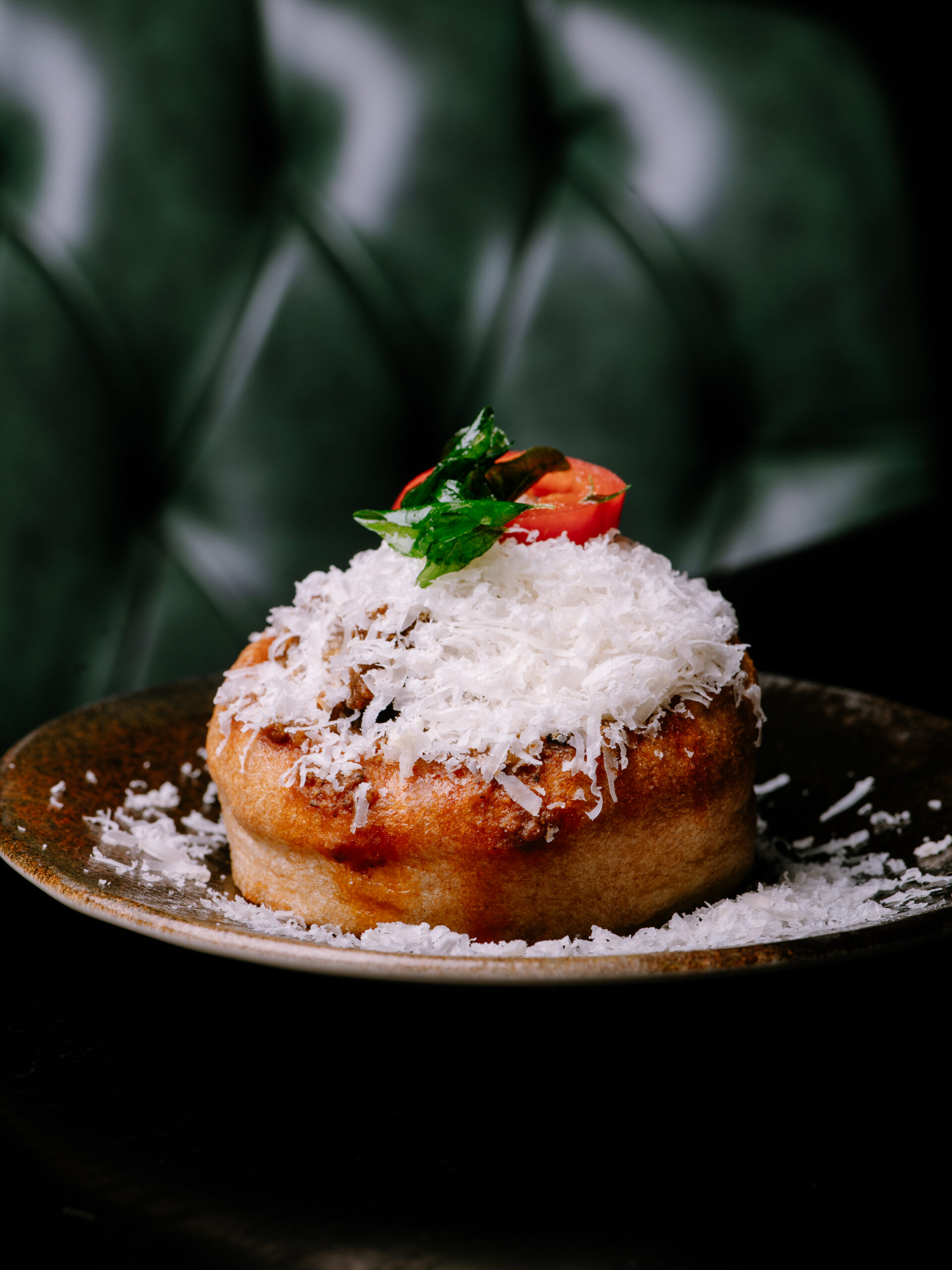
Few dishes explain the Kerala Canteen philosophy more quickly than our Beef Curry Pie.
Yorkshire and Kerala both have powerful food identities.
Rather than choosing between them, we bring them together.
Our rich Kerala-inspired beef curry meets a familiar British idea, creating something that belongs specifically to Kerala Canteen.
The same philosophy inspired our Kerala interpretation of another Yorkshire institution:
Sunday roast.
Kerala Spice Meets the Giant Yorkshire Pudding
Our Kerala-inspired Sunday Roast takes curried T-bone steak and serves it with a giant Yorkshire pudding and Kerala-influenced accompaniments.
It’s playful, but there’s a serious idea behind it.
The Great British Menu philosophy of combining regional British produce with authentic Indian flavour didn’t disappear after television.
It evolved.
Kerala Canteen is where that conversation continues.
Kerala soul. Yorkshire produce.
Kerala’s Spice Garden Has Reached the Cocktail Bar
Why should spices stop at food?
Our bar takes classic cocktails and gives them a Kerala identity.
Gunpowder & Turmeric Margarita
The familiar Margarita meets turmeric and gunpowder masala salt.
Recognisable enough to understand.
Different enough to remember.
Hibiscus & Jaggery Old Fashioned
A classic whisky cocktail reimagined with hibiscus and jaggery.
Tender Coconut & Ginger Mojito
The refreshing Mojito meets tender coconut water and ginger, ingredients that immediately transport the drink towards tropical Kerala.
Canteen Star
Our tropical house signature introduces ginger and jaggery to a familiar passion-fruit-led cocktail.
The same philosophy extends to our alcohol-free drinks.
Mocktails shouldn’t be an afterthought.
If the kitchen tells Kerala’s story through spice, the bar should too.
What Is Gunpowder in South Indian Food?
No, we’re not putting actual gunpowder into your dinner.
“Gunpowder” is a nickname sometimes used for podi, a South Indian dry spice or chutney powder.
Different versions can contain combinations of lentils, chillies, seeds and spices.
At Kerala Canteen, the idea of this intensely flavoured South Indian seasoning appears in dishes and drinks, including our Kerala Chutney Podi Potatoes and the masala salt used with our Gunpowder & Turmeric Margarita.
It’s another example of taking something rooted in South Indian flavour and presenting it in an unexpected way.
What Should I Order to Discover Kerala’s Spices?
If you’ve never tried Kerala food before, don’t begin by asking:
“What’s your hottest curry?”
Instead ask:
“Which dishes show me different Kerala spices?”
A great introduction at Kerala Canteen might include:
Crispy Curry Leaf Calamari
For the fragrance of curry leaves.
Green Pepper Lamb Chop
For Kerala’s historic relationship with pepper.
Trivandrum Fried Chicken
For a bold introduction to Kerala-inspired seasoning.
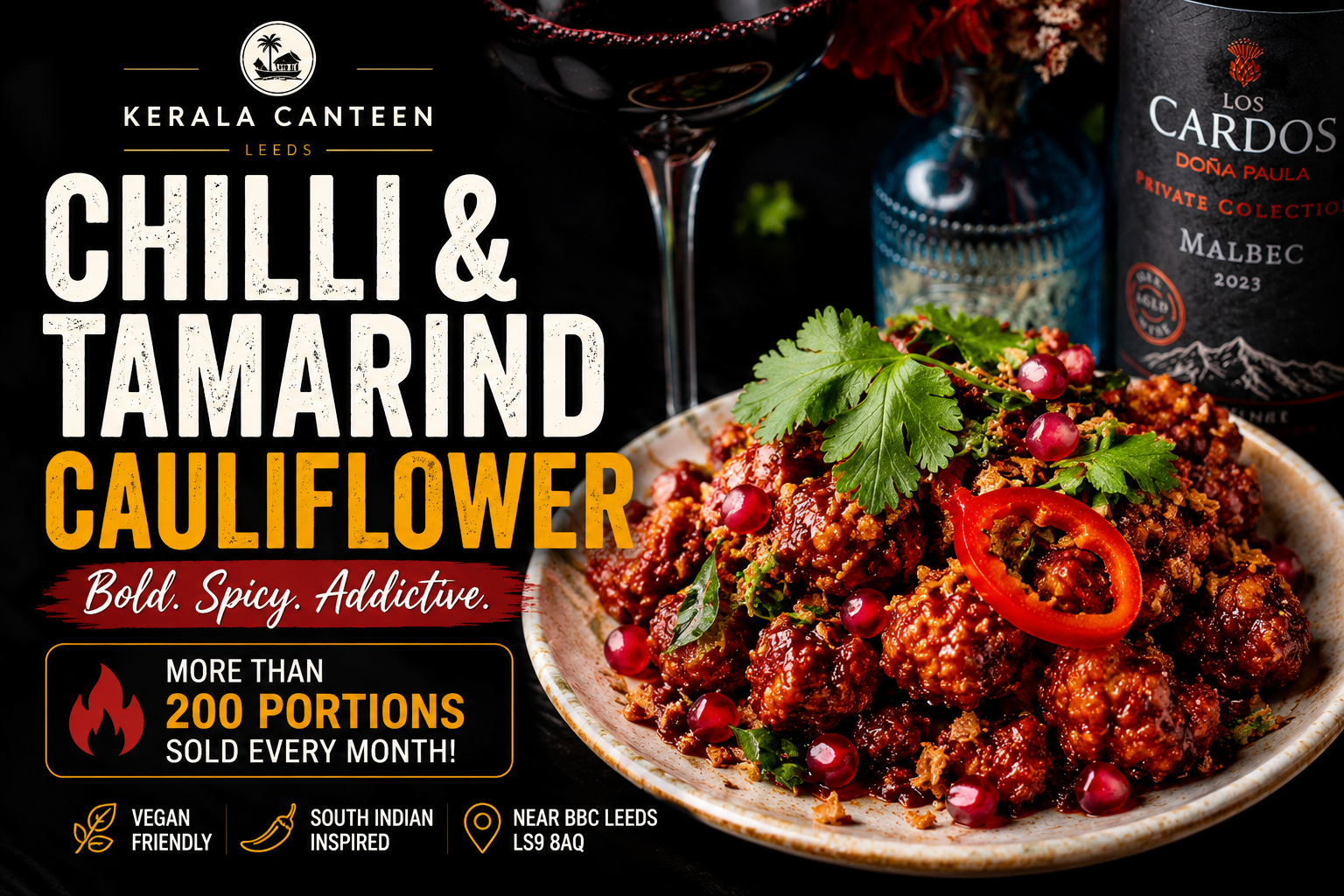
Chilli & Tamarind Cauliflower
For the relationship between heat and sourness.
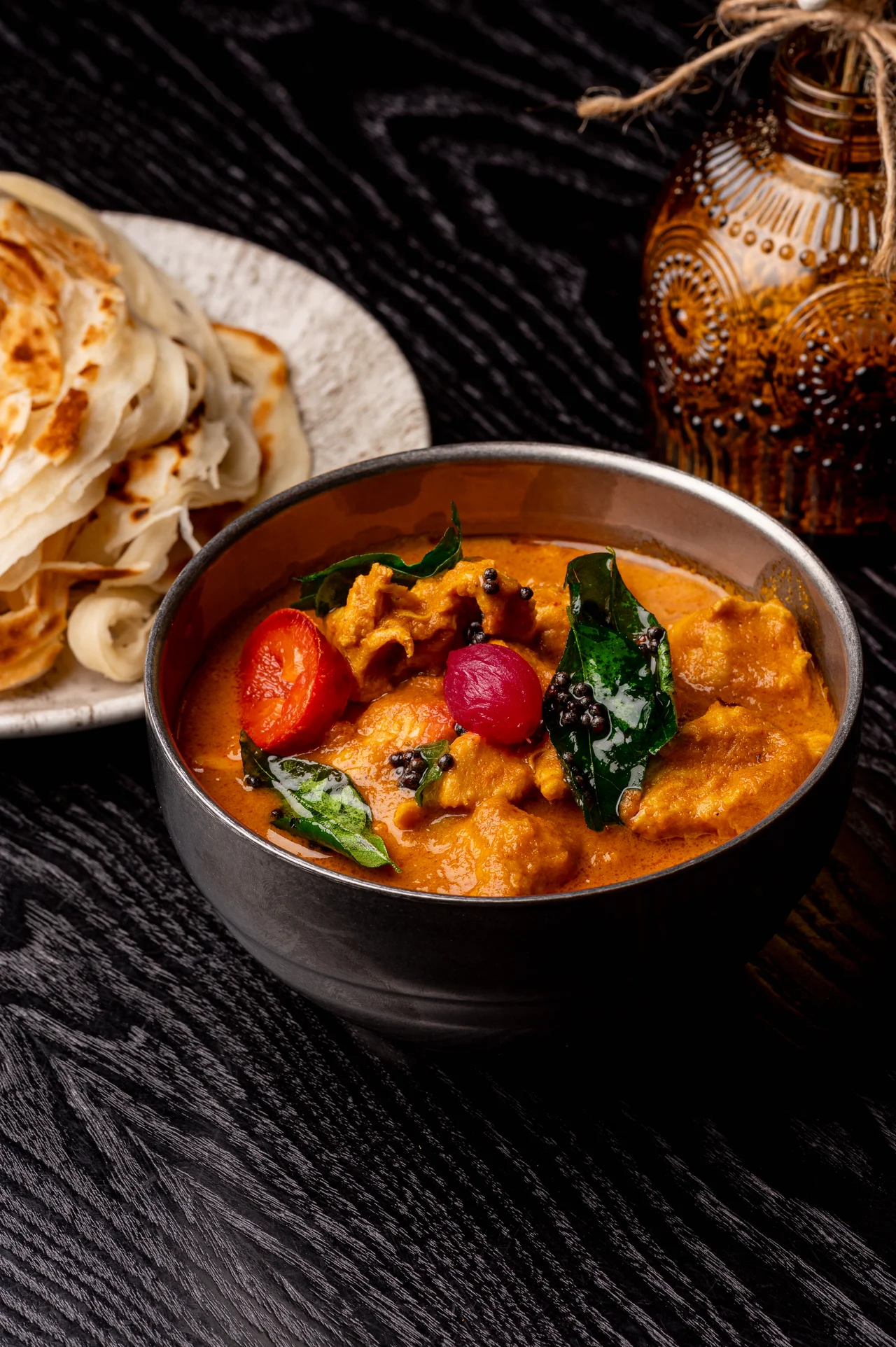
Beef & Bone Marrow Curry
For deeper, slower, comforting spice.
Kerala Porotta
Because rich curry deserves flaky bread.
Then try a Gunpowder & Turmeric Margarita and discover what happens when the spice journey continues into the glass.
Why Kerala Spices Matter to Bobby Geetha
For Bobby Geetha, Kerala spices aren’t a restaurant trend.
They’re connected to childhood.
- Family.
- Place.
- And memory.
Growing up in Kerala means experiencing spices before understanding their culinary terminology.
You smell curry leaves hitting hot oil.
You see pepper drying.
You taste ginger, coconut and chilli in everyday food.
Later, professional kitchens teach technique.
But the memory comes first.
Kerala Canteen was created to bring those two worlds together:
The food memories of Kerala and the discipline of professional cooking.
Why Kerala Is Called the Spice Garden of India: FAQs
Why is Kerala famous for spices?
Kerala’s tropical climate, highland growing regions and historic position on maritime trading routes helped make the region an important centre for spices, particularly black pepper and cardamom.
What is the Spice Coast of India?
The term Spice Coast is strongly associated with Kerala’s Malabar Coast because of its historic role in the cultivation and international trade of spices.
What is Kerala’s most famous spice?
Black pepper is particularly important to Kerala’s historical spice story and the Malabar Coast’s international reputation.
What spices are associated with Kerala?
Kerala is associated with spices and aromatics including black pepper, cardamom, ginger, turmeric, cloves, cinnamon and nutmeg, alongside essential culinary ingredients such as curry leaves.
Is Kerala food very spicy?
Not necessarily. Kerala cuisine can be hot, but spice is used for aroma, warmth, depth, colour and complexity, not simply chilli heat.
Why does Kerala food use curry leaves?
Curry leaves thrive in South India’s climate and are fundamental to the aroma of many regional dishes. They are frequently tempered in hot oil to release their flavour.
Does Kerala food use coconut?
Yes. Coconut is extremely important in Kerala cooking and may be used fresh, grated, roasted, as coconut milk or as coconut oil.
What is Kerala gunpowder?
“Gunpowder” commonly refers to podi, a category of intensely flavoured South Indian dry spice or chutney powders rather than literal gunpowder.
Where can I try Kerala food in Leeds?
Kerala Canteen in Leeds specialises in contemporary Kerala food, including Kerala tapas, curries, regional breads and spice-inspired cocktails and mocktails.
Taste India’s Spice Garden in Leeds
You can read about Kerala’s spice history.
You can learn the names of the ingredients.
But the easiest way to understand why Kerala became synonymous with spice is still to taste them.
Smell fresh curry leaves.
Experience the warmth of pepper.
Taste coconut against chilli.
Discover tamarind’s sourness.
Notice what turmeric does beyond simply adding colour.
Try cardamom for fragrance rather than heat.
And suddenly “Indian spices” stop being one generic idea.
Each ingredient develops its own personality.
That’s what makes Kerala cooking extraordinary.
And it’s the philosophy behind Kerala Canteen.
Recognised among the Top 100 Indian Restaurants in the UK, Kerala Canteen brings the flavours and culinary heritage of southern India to Leeds through Kerala tapas, curries, regional breads and spice-infused drinks.
If you’re searching for Kerala food in Leeds, South Indian restaurant Leeds, Indian spices, Kerala spices, authentic Indian food Leeds, Kerala restaurant Leeds or want to understand why Kerala is known as the Spice Garden of India, the best place to continue the journey is around the table.
Taste the pepper.
Smell the curry leaves.
Tear the porotta.
Discover the Spice Coast.
Kerala Canteen, Leeds — Kerala in flavour. Yorkshire at heart.